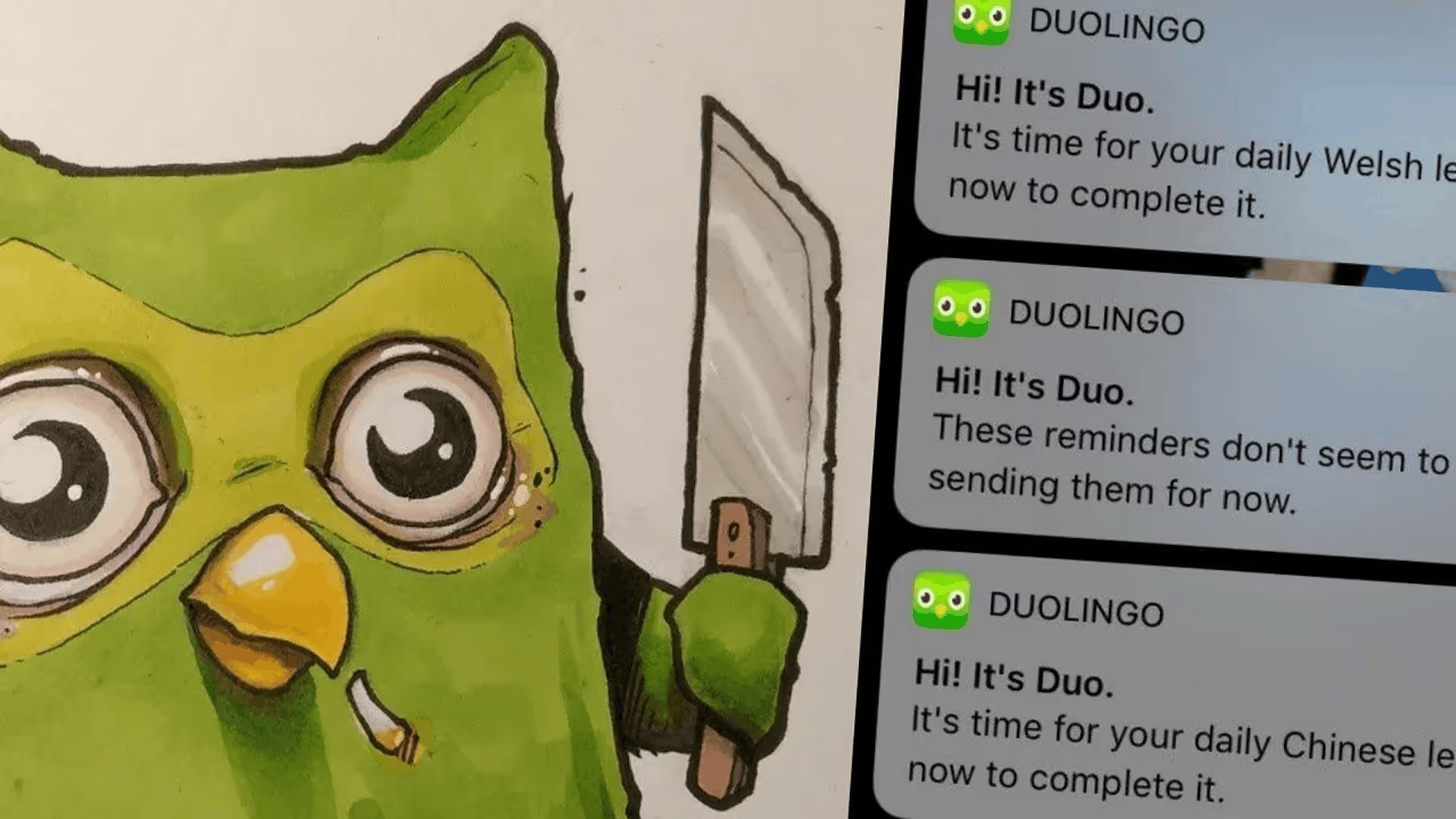
There is a particular kind of brand content that nobody asked for, that nobody was paid to share, and that spreads faster than anything a media plan can engineer. It is usually slightly unhinged. It arrives at exactly the right cultural moment. And it makes the person sharing it feel like they are in on something, rather than being marketed to.
This is the paradox at the centre of meme marketing: the less it looks like advertising, the more effectively it functions as one.
What a meme actually does
Limor Shifman's foundational work on internet memes describes them as units of popular culture that spread through imitation and remix, carrying social meaning precisely because they require shared context to understand (Shifman, Memes in Digital Culture, MIT Press, 2013). That shared context is the mechanism. A meme is not just content. It is an in-group signal: recognising it and passing it on signals cultural membership. When a brand successfully enters that logic, it is not just generating reach. It is being admitted into a conversation it did not initiate, which is considerably more valuable.
Research from the Journal of Interactive Marketing reveals that meme-based content generates 60% higher engagement rates than traditional branded content among Gen Z consumers. Meme-based content typically achieves 3 to 5 times higher engagement rates than traditional branded content, 70% higher shareability compared to standard marketing posts, and 60% better brand recall among Gen Z and millennial audiences. (Digital Marketing Institute, 2024)
The commercial logic is straightforward: memes compress the distance between brand awareness and cultural relevance in a way that produced content almost never can. What requires a media budget of considerable scale to achieve through paid channels can happen organically in hours if the content is genuinely memeable.
The case studies that changed the conversation
Duolingo is the most studied example, and the one most brands have tried and failed to replicate. The brand's TikTok transformation, from an educational app with conventional social content to an account where a green owl mascot stalks users who miss lessons, flirts with celebrities, and shows up uninvited at music festivals, was not accidental. In 2024, the company sent employees in full Duo costumes to Charli XCX's BRAT tour with no official partnership and no sponsorship deal, understanding that this was the perfect cultural moment to enter. Even Charli XCX posted about it, a marketing win without spending a dollar on traditional ads. The account now generates engagement rates that rival global entertainment brands, not education apps.
Ryanair's approach is structurally different but operates on the same logic. The airline has the worst reputation in European aviation for comfort, fees, and customer service. Rather than manage that reputation defensively, its social team turned it into content. The self-deprecating memes about cramped seats and baggage charges are effective precisely because they demonstrate that the brand knows what people say about it and is unbothered. Ryanair leaned into its "unloved" image and turned it into entertainment, using snarky filters, meme references, and self-deprecating humour to joke about the very things consumers complain about.
KFC's response to its 2018 UK chicken shortage is perhaps the most elegant single example: the brand ran a full-page newspaper ad showing an empty KFC bucket with the letters rearranged to spell "FCK," apologised with deadpan humour, and transformed a supply chain crisis into brand affinity. It worked because the self-awareness was proportionate to the situation and the humour was honest rather than deflective.
Why most brands fail at this
The very moment a brand appears to be trying too hard to be relevant, the value of its meme marketing plummets. This creates a delicate balancing act of appearing effortlessly in tune with culture while actually investing significant resources into the approach.
This is the central tension, and it explains why the majority of brand attempts at meme culture land badly. Memes are calibrated to detect inauthenticity. An out-of-date meme format deployed too late by a brand that does not otherwise inhabit that cultural space is not just ineffective; it becomes its own meme, the brand failing publicly at being relevant. Use of outdated memes by the uninformed in marketing has itself become a meme: "When Gen-Z Writes the Marketing Script." (Ward, Internet Meme Marketing over the Fad Cycle, 2026)
The deeper problem is structural. The rapid-response nature of effective meme marketing often clashes with traditional brand approval processes. Companies must develop new workflows that balance timeliness with brand safety. A meme that requires three rounds of legal review before posting is not a meme. It is a document. The brands that do this well have reorganised their internal processes around speed and creative trust, giving social teams real autonomy rather than the performance of autonomy with a senior approval layer that kills timing.
What it actually requires
Jonah Berger's analysis in Contagious (2013) identified social currency, the way sharing something signals identity, as one of the primary drivers of viral content (Simon & Schuster, 2013). Memes are the purest form of social currency in digital culture. They spread because sharing them says something about the person sharing them, not just the brand behind them.
That dynamic only works if the brand has a coherent enough personality that the meme makes sense within it. Duolingo's unhinged content works because it is consistent with everything else the brand does: the aggressive push notifications, the gamification logic, the mascot's established character. Ryanair's self-deprecation works because it is consistent with the brand's actual reputation and pricing model. The meme is not a departure from the brand identity. It is the brand identity expressed in the language of the internet.
Brands without a coherent personality cannot meme their way into cultural relevance. The content will land as costume rather than character, and the internet is very good at telling the difference.
References
- Shifman, L. (2013). Memes in Digital Culture. MIT Press. Link
- Berger, J. (2013). Contagious: Why Things Catch On. Simon & Schuster. Link
- Razzaq, A., Shao, W., & Quach, S. (2023). Towards an Understanding of Meme Marketing. Journal of Marketing Management, 39(7–8), 670–701. Link
- Ward, M. R. (2026). Internet Meme Marketing over the Fad Cycle. Journal of Interactive Marketing. Link
- Blankboard Studio. (2025). Duolingo Marketing Strategy: How Humor & Memes Drive Growth. Link
- Digital Marketing Institute. (2024). Meme Marketing Effectiveness Report. Link