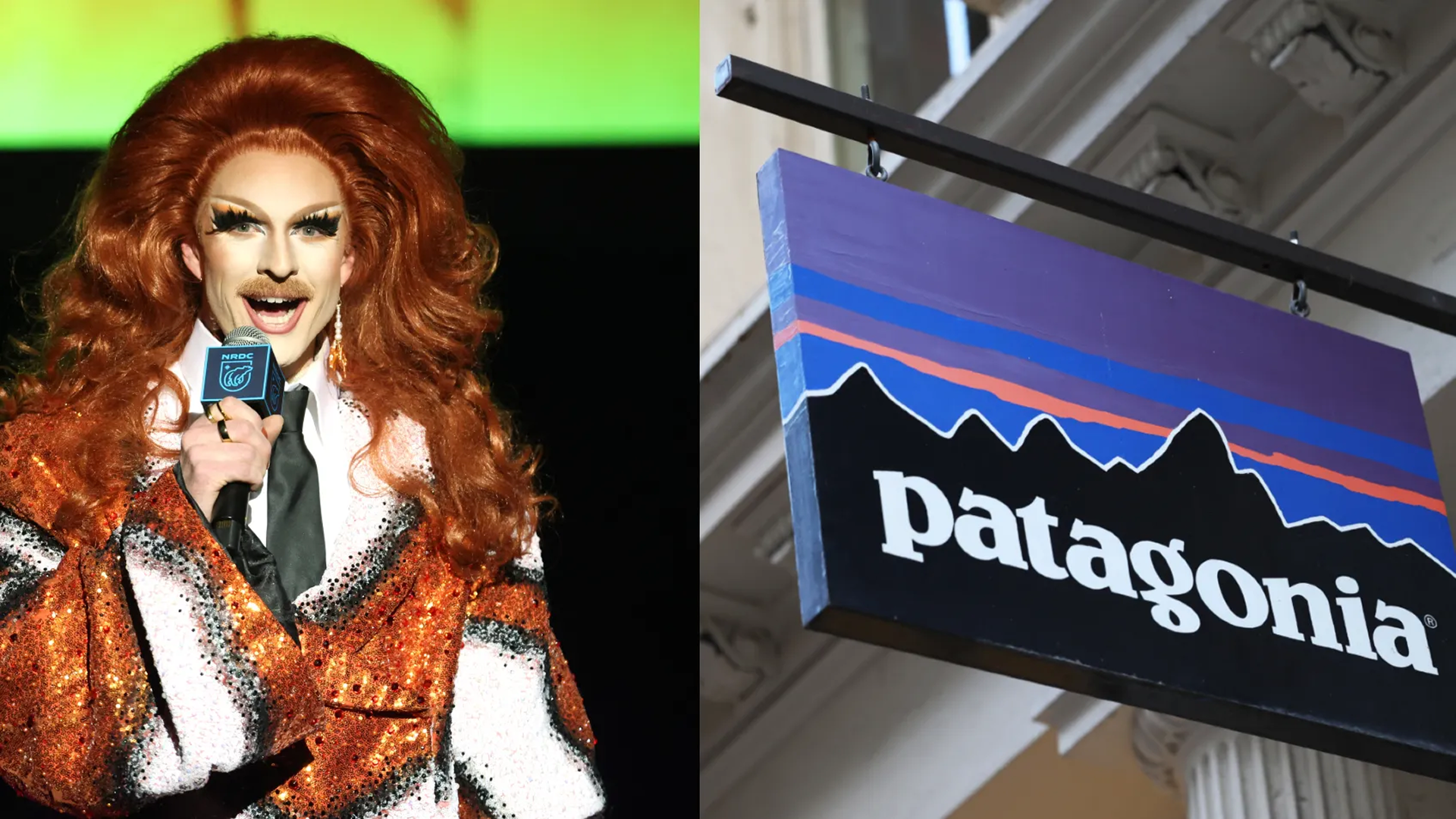
In January 2026, Patagonia filed a federal trademark infringement lawsuit in Los Angeles against Wyn Wiley, the environmental activist behind the drag persona Pattie Gonia. The company asked for one dollar in damages. The legal fees could surpass one million.
That arithmetic tells you everything you need to know about what this case is actually about.
The facts, first
Pattie Gonia has nearly three million followers across TikTok and Instagram. She has raised close to four million dollars for environmental and social justice nonprofits, including one million from a hundred-mile hike through California in full drag. She first went viral in 2018 posting clips in high heels while camping. She is, by any reasonable measure, one of the most effective climate communicators in the United States, operating in exactly the cultural territory Patagonia has spent fifty years trying to occupy.
In 2022, Patagonia contacted Wiley after hearing about a fundraising collaboration between the performer and Hydro Flask. On a phone call, the company asked her not to sell products bearing the Patagonia logo, font, or the name "Pattie Gonia," and outlined the request over email. Three years later, when Pattie Gonia began selling clothing with her name on it and filed a trademark application in September 2025, Patagonia sued (NBC Washington / AP, 2026).
The legal logic is sound, and worth acknowledging before dismissing it. Trademark law in the United States operates on a use-it-or-lose-it principle. A brand that fails to consistently enforce its intellectual property risks forfeiting the ability to defend it against bad actors later. Patagonia said as much in its statement, noting that selective enforcement could leave it exposed to oil and gas lobbies, counterfeiters, and hate groups who might later exploit the precedent. "We cannot selectively choose to enforce our rights based on whether we agree with a particular point of view," the company said.
That is a legally accurate statement. It is also exactly the wrong thing to say in public about a queer climate activist with three million followers, days before Pride Month.
The gap between legal logic and brand logic
Patagonia's proposed resolution asks Wiley to withdraw all trademark applications, stop using the Patagonia logo and font, and stop selling apparel under the Pattie Gonia name. As a legal ask, it is not unreasonable. As a public offer directed at a beloved activist with millions of engaged followers, it reads less like a compromise and more like a capitulation demand (Inside Retail Asia, 2026).
Pattie Gonia framed the lawsuit as "a corporation trying to erase an activist." That framing is not entirely accurate, but it is extraordinarily effective, and the speed with which it landed tells you something important: Patagonia's audience was primed to believe it. You do not lose narrative control that fast unless the story you have been telling about yourself has created expectations your legal department does not share.
After Pattie Gonia announced the lawsuit publicly, a supporter posted a TikTok video outside a Goodwill donation center dropping off his Patagonia hat: "I think that you just completely wrecked your company, at least from my demographic, the LGBTQ demographic" (NBC Washington / AP, 2026). Whether that reaction is proportionate to the legal facts is almost beside the point. What matters for brand strategy is that it happened, and that Patagonia had no credible counter-narrative ready.
The question nobody is asking
Most of the commentary on this case has focused on whether Patagonia is legally right or morally wrong. That is a less interesting question than the one hiding underneath it: what should Patagonia have done in 2022, when it first became aware of the overlap?
The company had, at that moment, a choice between two strategic frames. The first is the one it chose: treat the similarity as a legal problem to be contained. Draw a line, send an email, wait. The second frame is the one it did not choose: treat the similarity as a cultural signal.
Pattie Gonia did not emerge from nowhere. She was built on exactly the values Patagonia claims as its own: environmental stewardship, community, anti-corporate courage, queer joy in the outdoors. Her audience and Patagonia's audience overlap significantly. The persona was a parody, built on wordplay and drag's long tradition of riffing on brand identity. And she was raising millions of dollars for causes Patagonia funds through its own giving programmes.
The brand that genuinely lives its values would have called that a partnership opportunity. It would have found a way to collaborate that acknowledged the overlap, benefited both parties, and turned a potential conflict into a story about two environmental voices finding common ground. That story would have been worth far more than any trademark enforcement precedent.
Instead, Patagonia sent a cease-and-desist email and waited three years.
What this case reveals about brand activism
The deeper problem here is structural: brands that build identity around activism and community have to accept that they cannot own the territory they are trying to protect. They can occupy it, contribute to it, earn the trust of the people inside it. But territory built on shared values belongs to the community that shares those values, not to the corporation that showed up first and filed for a trademark.
Patagonia has spent decades arguing that it is not a typical corporation. That argument, which has been commercially and culturally powerful, creates an obligation. When you tell people that you are "in business to save the home planet," you invite them to hold you to a different standard. A one-dollar damages claim against a beloved activist has cost Patagonia something far more valuable than any amount of money: the goodwill it spent fifty years building (Inside Retail Asia, 2026).
The legal question will resolve itself one way or another. Both sides have made small steps: Pattie Gonia said she would drop the trademark application if Patagonia drops the suit; Patagonia acknowledged "any hurt the lawsuit has caused, especially in the LGBTQ+ community" (NBC Washington / AP, 2026). A settlement is possible and probably likely.
What will not resolve as easily is the question this case has raised for anyone who has taken Patagonia's brand story seriously: was the activism ever the point, or was it always the positioning?
That question, once asked, does not go away. And the answer Patagonia gives through its actions over the next year will matter considerably more than whatever the court decides.
Main photo: Getty Images / Them
References
- Inside Retail Asia / Chadwick, S. C. (2026). How a Trademark Dispute Became a PR Crisis for Patagonia. Inside Retail Asia. Link
- Peterson, B. / Associated Press. (2026). Patagonia v. Pattie Gonia: Company Sues Drag Artist with Environmental Message. NBC Washington. Link
- Holbrook, T. (2026). On Likelihood of Consumer Confusion in Trademark Law. University of Denver. Cited in NBC Washington / AP.
- Gerben, J. (2026). On Trademark Enforcement and Settlement. Gerben Law. Cited in NBC Washington / AP.
- Pearson, L. (2026). On Brand Protection and Trademark Precedent. Brand Geek. Cited in NBC Washington / AP.