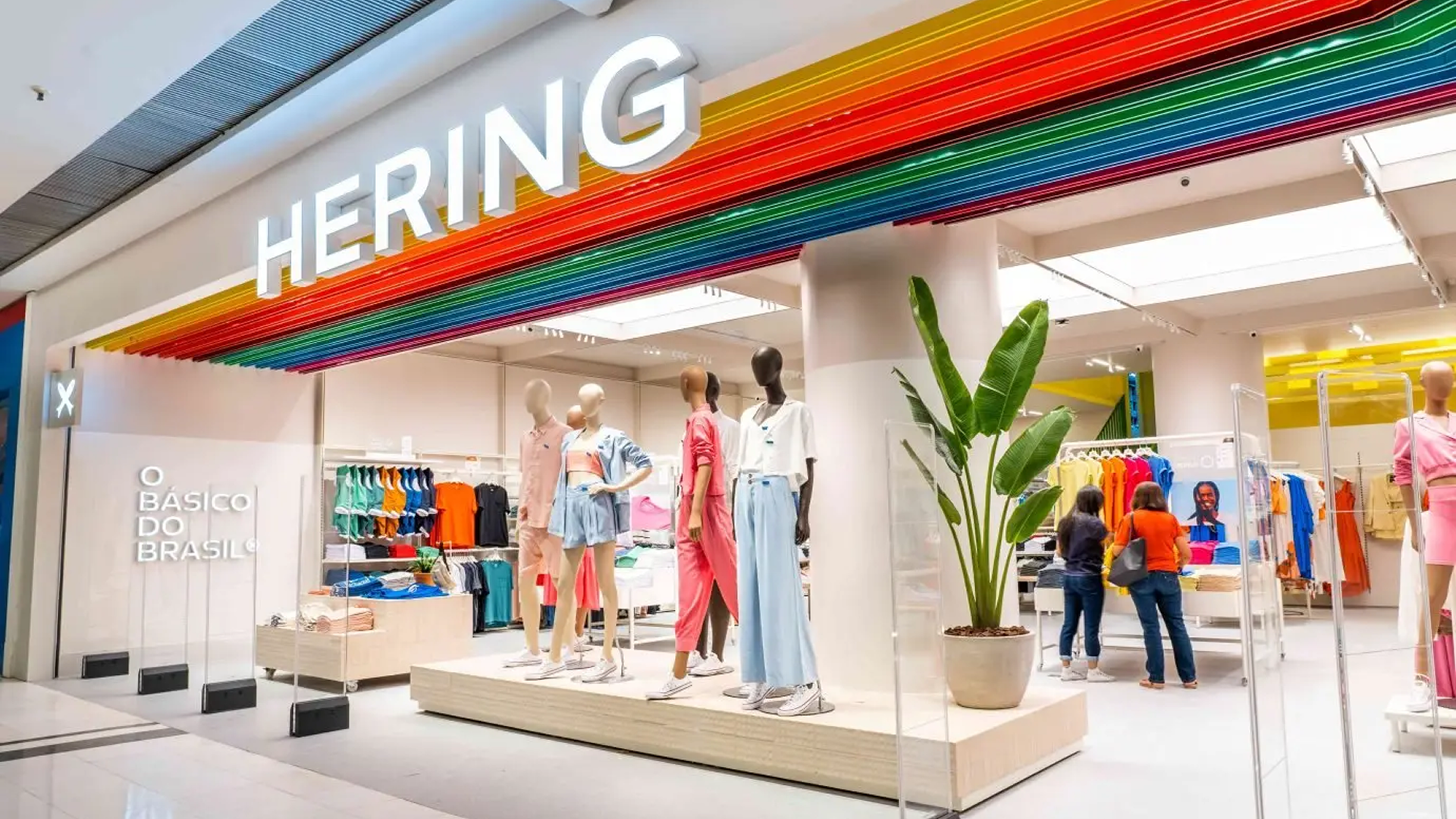
In 2021, Grupo Soma paid R$5.5 billion for Cia. Hering. The transaction made sense on paper: Hering had 145 years of brand equity, a loyal customer base, and a clear positioning as Brazil's democratic basic, the accessible t-shirt for everyone. It was, on any reasonable valuation model, worth the price.
Today, the same brand is valued at between R$600 million and R$800 million. Revenue fell 18.5% in the first quarter of 2026 alone. For the first time in 145 years, no member of the Hering family runs the company. The founding family, holding roughly 11% of the Azzas 2154 group that now controls the brand, has hired BR Partners to negotiate a buyback. Azzas responded formally to a CVM inquiry: "Hering is not for sale." (Times Brasil / CNBC, 2026)
What the Hering family is trying to recover is not just a revenue stream. It is a brand that knew exactly what it was. And the Azzas 2154 dispute is not just a corporate governance story. It is a case study in what happens when the soul of a brand is separated from the people who built it.
What the acquisition actually bought
The Hering brand was worth R$5.5 billion not because of its factories, its distribution network, or its supply chain. Those are assets any competent operator can replicate or replace. It was worth that figure because of something considerably harder to acquire: a positioning so precise and consistent that an entire country had internalized it. The two fish. The accessible basic. The t-shirt that belongs to everyone.
That positioning is a form of cultural infrastructure. It took 145 years to build, required an obsessive and specific understanding of who Hering was for and why, and depended on a management culture oriented around democratic pricing, scale, and simplicity. Inside a group that also manages Arezzo, Farm Rio, Schutz, and Reserva, brands with radically different price points, aesthetics, and consumer relationships, that obsession becomes structurally impossible to maintain. The same management meeting cannot optimize for Farm's aspirational lifestyle positioning and Hering's democratic accessibility at the same time. The attention dilutes. The decisions drift. And the brand, which was never a logo or a visual identity but a promise maintained through thousands of operational decisions over more than a century, begins to disappear.
This is what the R$4.7 billion in lost valuation actually represents. Not a market correction. Not an economic cycle. The cost of losing the soul.
The pattern is well documented
Hering is not the first brand to go through this. The Gap spent the 1990s as one of America's most recognisable retail identities: the democratic American casual, the t-shirt for everyone from celebrities to college students. When Mickey Drexler, the CEO who built that identity, was removed in 2002, the company spent the next two decades cycling through leadership changes, logo redesigns, a catastrophic collaboration with Kanye West, and a repositioning that managed to alienate its core customer while failing to acquire new ones. The brand's share of the US denim market fell from 30% to 14% in under a decade. The recovery, which began only in the mid-2020s with a return to the basics Drexler had built and a new creative director who understood the heritage, took over 20 years (The Robin Report, 2024).
J.Crew went through the same arc more dramatically. The brand built its identity around affordable preppy style with a specific and loyal customer. When management began pushing it upmarket, raising prices and chasing a more fashion-forward audience, the brand found itself between two positions: too expensive for its original customer, not distinctive enough for the premium segment it was trying to enter. It filed for bankruptcy in 2020. The recovery began when the brand returned to what it had been, including bringing back the catalog that had been a signature touchpoint for decades (Inside Retail US, 2024).
The lesson in both cases is the same. The brand's commercial value was not separable from its identity. When the identity drifted, the revenue followed. And the recovery in both cases only began when someone made a deliberate decision to return to what the brand had actually been, not what management at the time wished it could become.
The M&A problem nobody puts in the pitch deck
When a brand is acquired, the due diligence covers the financials, the supply chain, the intellectual property, the customer database. What it almost never covers adequately is the cultural infrastructure: the understanding of who this brand is for, what it means to them, and what operational decisions are required to maintain that meaning over time.
That knowledge does not live in a document. It lives in the people who built the brand, in the intuitions developed over years of being inside a specific market with a specific customer. The Hering family's instinct about what a Hering t-shirt should cost, who should be able to afford it, and what it should look like on a shelf is not transferable through an onboarding process or a brand guidelines document. It is embodied knowledge, and when those people leave, or are restructured into a portfolio management role within a larger group, that knowledge leaves with them.
This is why the founding family's desire to buy Hering back is not primarily sentimental. It is strategic. They are not trying to recover a legacy. They are trying to recover the one thing that made the asset worth what Soma paid for it: the capacity to know, from the inside, what Hering is.
The soul is the asset
The conventional framing of brand identity treats it as something intangible, separate from the hard numbers: a softer consideration alongside revenue, margin, and market share. The Hering case makes that framing impossible to sustain.
The R$4.7 billion in value that evaporated between 2021 and 2026 was not lost to a market downturn, a product failure, or a competitor. It was lost to the dilution of a brand identity that had taken 145 years to build. The soul was not a decorative layer over the asset. The soul was the asset. And when the decisions that maintained it stopped being made by people who understood it from the inside, the asset began to dissolve.
The JPMorgan analysts are probably right that a sale is unlikely in the short term. The financial arithmetic does not favor it. But the family Hering's instinct is correct: what Azzas 2154 is managing is no longer quite the same thing that was worth R$5.5 billion three years ago. The question is not whether the brand can recover. It is whether recovery is possible without returning to the kind of obsessive, specific, operational understanding of identity that no holding group can manufacture from the outside.
References
- Times Brasil / CNBC. (2026). Acionistas liderados pela família Hering articulam saída do grupo Azzas 2154. Link
- InfoMoney / JPMorgan. (2026). Azzas venderá Hering? Movimento da família entra no radar, mas transação é improvável. Link
- FashionNetwork Brasil. (2026). Família Hering avalia retomada da marca, mas venda pela Azzas 2154 é considerada improvável. Link
- Esquire Brasil. (2026). Azzas 2154: a tensão no relacionamento após a fusão dos grupos Arezzo e Soma. Link
- The Robin Report. (2024). Gap's Brand Reinvention Attempt. Link
- Inside Retail US. (2024). Gap, J Crew, and Abercrombie: The Retail Comeback Stories You Need to Know. Link
- Business of Fashion. (2025). J.Crew, Gap, Abercrombie: The Trouble With America's Most Beloved Mall Brands. Link